
The Comptroller and Auditor General: Watching the Books
Reference library · 1057 words

Parliament votes money; the executive spends it. The gap between those two acts is where public finance goes wrong, and every parliamentary system builds an institution to inspect it. In India that institution is the Comptroller and Auditor General, created by Article 148 of the Constitution and generally referred to as the CAG. The office audits the accounts of the Union government, of every state government, of most public sector undertakings and of a large number of autonomous bodies that receive public money, and it reports what it finds to legislatures rather than to ministers. Its head sits at the top of the Indian Audit and Accounts Department, staffed by a dedicated civil service cadre, which gives the office a permanent professional body rather than a rotating set of secondees.
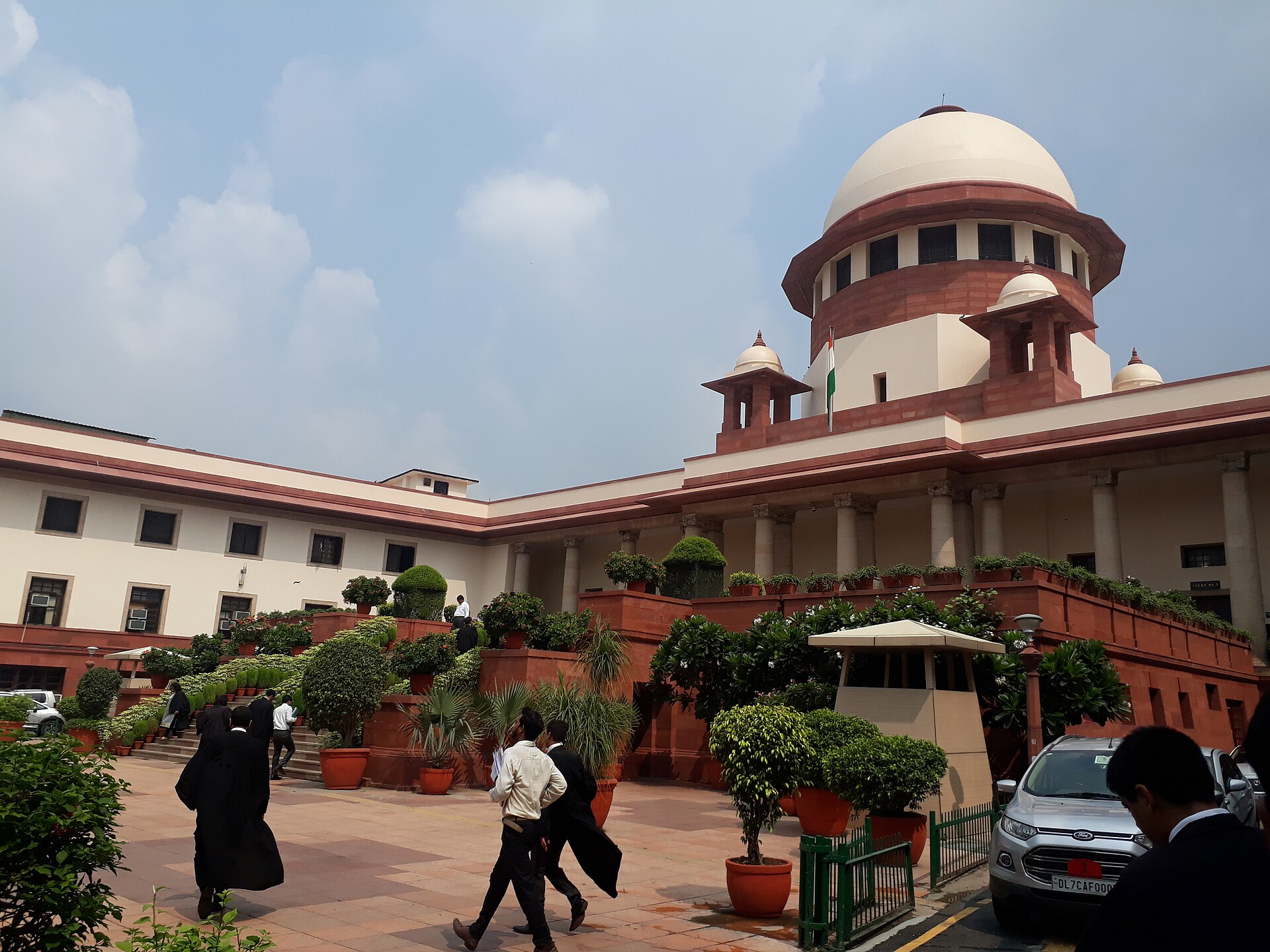
The Constitution's drafters treated independence as the whole point. Ambedkar described the office in the Constituent Assembly as among the most important under the Constitution, and the protections reflect that. The CAG is appointed by the President but can be removed only in the same manner and on the same grounds as a judge of the Supreme Court, which requires an address by both Houses of Parliament supported by special majorities on grounds of proved misbehaviour or incapacity. The term is six years or until the age of sixty-five, whichever comes first. Salary and administrative expenses are charged on the Consolidated Fund of India, meaning they are not subject to an annual parliamentary vote and so cannot be squeezed as a form of pressure. On leaving office the CAG is barred from further office under the Union or a state government, a provision designed to remove the incentive to audit gently in the hope of a subsequent appointment.
A name that no longer fits
The title is misleading in a specific way that matters. A comptroller, in the British tradition from which the office derives, controls the issue of money from the exchequer as well as auditing its use. The Indian office was carved out of the colonial Auditor General of India, a post that dates back to the mid nineteenth century and was given statutory footing by successive Government of India Acts. In practice the Indian CAG has never exercised the control function over the Union: money is issued by the executive, and after a reorganisation in the 1970s the routine accounting function for most Union ministries was separated out and departmentalised, leaving the CAG with audit rather than accounting for the centre. The office does still compile the accounts of the states. Detailed duties and powers are set out not in the Constitution but in the Comptroller and Auditor General's (Duties, Powers and Conditions of Service) Act of 1971, which Parliament can amend by ordinary legislation.
Three kinds of audit are conducted. Financial audit asks whether accounts present a true and fair picture. Compliance audit asks whether expenditure conformed to the rules, sanctions and appropriations under which it was authorised. Performance audit, the most consequential and the most contentious, asks whether public money achieved value: whether a scheme was designed sensibly, implemented competently, and produced the results claimed for it. Performance audit necessarily involves judgement about policy execution, which is why it generates the arguments that reach the newspapers.
How a report becomes accountability
The route from finding to consequence runs through Parliament, not through the auditor. Union reports go to the President, who causes them to be laid before both Houses; state reports go to the Governor for the state legislature. Once tabled, they are referred to the Public Accounts Committee, a committee of members from both Houses whose chairperson is, by long convention, drawn from the opposition. The Committee examines the reports, summons secretaries of ministries to answer for the findings, and issues its own reports with recommendations. Ministries must respond through action taken notes. The CAG itself has no power to punish anyone, recover money, cancel a contract or direct a change of policy. It writes; the legislature acts, or does not.
The office became a household name in India around 2010 to 2012 through a sequence of high-profile reports: on the finances and contracting of the Commonwealth Games held in Delhi in 2010, on the allocation of second generation telecom spectrum, and on the allocation of coal blocks to private and public companies. The spectrum and coal reports used a presumptive loss methodology, estimating the revenue foregone by allocating a scarce public resource administratively rather than by auction, and produced headline figures running into lakhs of crores of rupees. Those figures dominated public debate and contributed materially to the political environment of the period.
They were also genuinely contested, and it is worth being precise about why rather than treating the dispute as mere political noise. Critics, including some former officials of the department, argued that a presumptive loss calculation assumes a counterfactual auction outcome that cannot be known, that it treats a deliberate policy choice to price a resource low in pursuit of other objectives as if it were a loss, and that publishing a single headline number invites misreading. Defenders argued that quantifying the cost of a discretionary allocation is precisely what a value-for-money audit should do, and that the alternative, describing the problem without a figure, guarantees it will be ignored. Subsequent judicial and administrative outcomes went in different directions on different matters, which is why no clean verdict on the episode exists.
The office's structural limitations are less discussed but more important. Audit is retrospective, often reporting on spending years after it occurred, by which point officials have moved and the money is gone. Public Accounts Committee recommendations are not binding and backlogs of unexamined reports are chronic in some states. Audit access to private parties in public-private partnerships is legally awkward, as is scrutiny of borrowing routed through state-owned corporations to keep it off the government's own balance sheet. The department has responded with data-driven audit techniques and faster reporting cycles, and it has taken on external audit assignments for United Nations bodies, which brings both revenue and international standing. But the fundamental design remains what the Constitution intended: an independent professional auditor with total access to records, complete freedom to publish, and no power at all to compel. Whether that produces accountability depends entirely on whether legislatures choose to use what the auditor gives them.
References
- Comptroller and Auditor General of IndiaCAG of India: mandate and audit reports
- Legislative Department, Ministry of Law and JusticeConstitution of India and central Acts
- Parliament of IndiaSansad: parliamentary committees
- PRS Legislative ResearchAnalysis of Indian public finance institutions
This is a reference article, written from the sources above. It is background, not news reporting.