

The IITs: Institutions Built for Engineering Excellence
Reference library · 1039 words
.jpg)
Few institutions carry as much weight in Indian public life as the Indian Institutes of Technology. They are a brand, a status marker, an export pipeline and a national argument all at once. The origin is more deliberate than the mythology suggests. In 1945, before independence, a committee chaired by the industrialist and administrator Nalini Ranjan Sarkar was asked how India might build the technical workforce an industrialising country would need. Its recommendation was for a small number of higher technical institutions, on the model of the Massachusetts Institute of Technology, distributed across the country's regions rather than concentrated in one place.
Built with the help of rival blocs
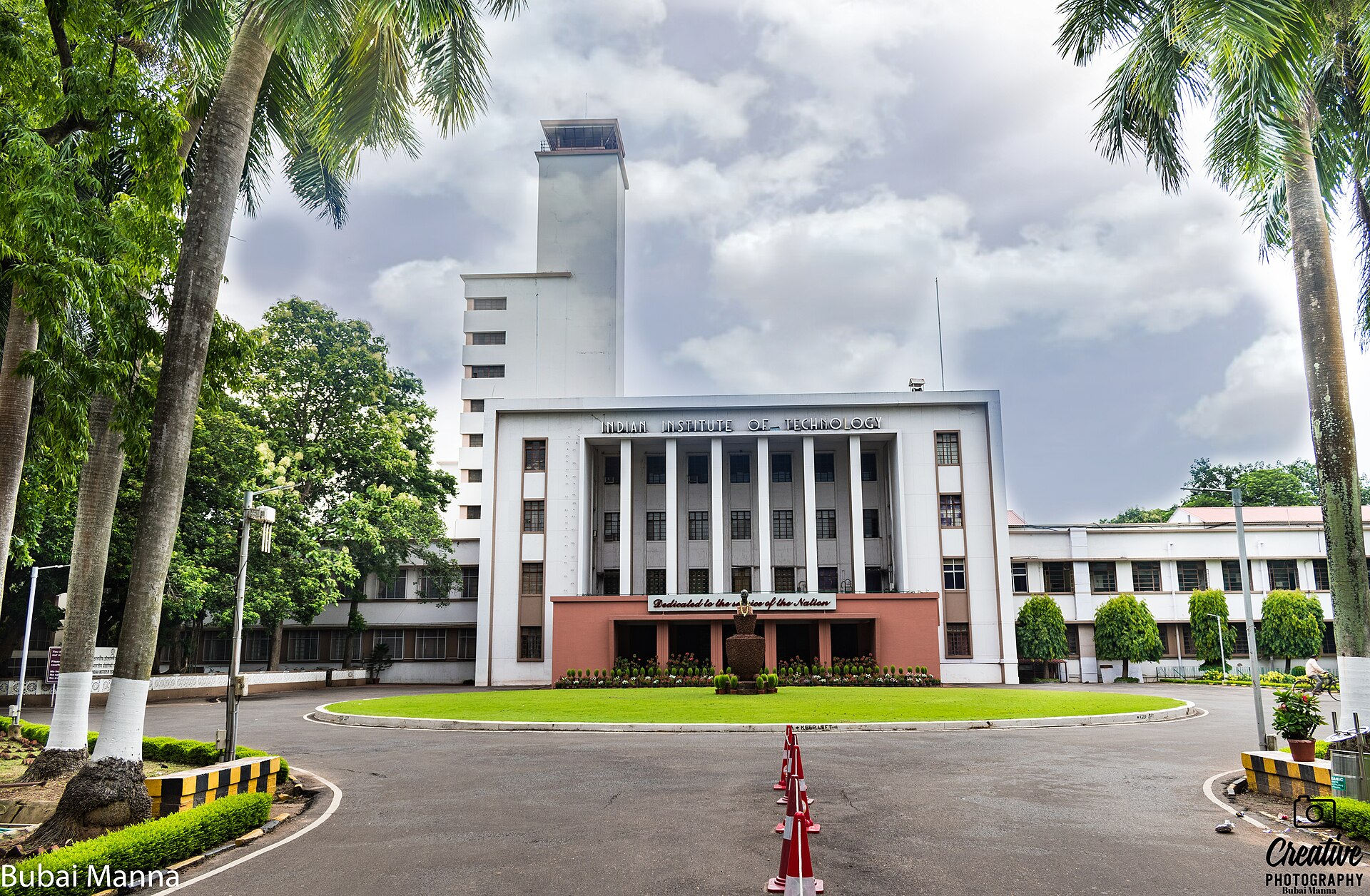
The first opened at Kharagpur in West Bengal in 1951, in the buildings of the former Hijli Detention Camp, a colonial prison for political detainees. The symbolism was noted at the time and is still recorded on the campus. Four more followed over the next decade, and here the young republic's non aligned foreign policy became an educational strategy. Each new institute was built with technical assistance from a different foreign partner, which meant India acquired laboratories, equipment and visiting faculty from opposing sides of the Cold War simultaneously. Bombay, established in 1958, was assisted by the Soviet Union through UNESCO. Madras, from 1959, was built under an agreement with West Germany, and German engineering influence persisted in its curriculum for years. Kanpur, also from 1959, was supported by a consortium of nine American universities, an arrangement that among other things gave India one of its earliest academic computing installations. Delhi began as a college with British assistance and became an IIT in 1963.
Parliament gave them a formal legal foundation through the Institutes of Technology Act of 1961, declaring them institutions of national importance. That status matters in practice: it grants degree awarding power and a governance structure with a substantial degree of academic autonomy, though the institutes remain funded by and answerable to the central government. Guwahati was added in 1994, largely as a commitment to the north east. Roorkee, whose engineering college dates to 1847 and is among the oldest in Asia, was converted into an IIT in 2001. Then came a rapid expansion: eight new institutes from 2008 and 2009, and further additions afterwards, bringing the total to twenty three spread across most states.
The entrance examination as national ritual
Admission is through the Joint Entrance Examination, now run in two stages. JEE Main, taken by well over a million candidates a year, serves both as the qualifier for the second stage and as the admission route to the National Institutes of Technology and other centrally funded institutions. Roughly the top two hundred and fifty thousand proceed to JEE Advanced, which is set by the IITs themselves and is notoriously difficult, testing physics, chemistry and mathematics through problems designed to defeat memorisation. The number of undergraduate seats available across all twenty three institutes is in the region of seventeen thousand. The arithmetic is the whole story: a candidate's chance of a seat is well under two percent, and the chance of a computer science seat at one of the older institutes is a small fraction of that.
An entire industry has grown around those odds. Kota in Rajasthan is the best known coaching town, where teenagers move for one or two years, often living away from their families in hostels, following schedules built around lectures and mock tests. Similar operations exist in Hyderabad, Delhi and elsewhere, and the largest coaching companies are now substantial listed or venture funded businesses. The human cost is documented rather than alleged: student suicides in coaching towns are reported each year in numbers serious enough that Rajasthan authorities and the central government have issued guidelines on counselling, test frequency and hostel safety. Defenders of the system argue that a transparent, anonymous examination is the fairest available mechanism in a society where connections otherwise dominate. Critics argue that a test which effectively requires two years of paid coaching is not neutral at all, and that it systematically favours families with money and urban access.
Access has been reshaped by reservation policy. Seats are reserved for Scheduled Castes and Scheduled Tribes, and from 2008 a twenty seven percent quota for Other Backward Classes was implemented in central institutions following a constitutional amendment upheld by the Supreme Court. A further ten percent for economically weaker sections among the general category was introduced from 2019. The IITs also introduced supernumerary seats for women from 2018 after data showed female enrolment had fallen to a strikingly low share, and the proportion of women in the incoming class rose substantially as a result. Each of these measures has been contested, and the debate about merit and access in Indian higher education runs directly through these campuses.
What they produce, and what they are criticised for
The output is undeniable. IIT graduates staffed the Indian software industry as it scaled in the 1990s, founded a large share of the country's technology companies, and populate senior ranks at global firms; Sundar Pichai, who studied at Kharagpur, is the most cited example. Alumni have also gone into politics, administration and activism, and the alumni networks themselves function as informal capital, opening doors in a way that formal credentials alone do not.
The criticisms are equally persistent and mostly internal to Indian debate. One is the brain drain question: a public education heavily subsidised by Indian taxpayers has for decades sent a significant share of its graduates abroad, though the flow has shifted as domestic opportunities improved. A second is research. The IITs are excellent at undergraduate teaching and selection, but their research output and doctoral production have historically lagged what comparable institutions elsewhere achieve, constrained by faculty vacancies, teaching loads and funding structures. A third is breadth: engineering dominates so completely that the humanities and social sciences on these campuses are thin, and many students who spend years preparing for the entrance examination arrive with little exposure to anything else. A fourth, raised increasingly by the institutes themselves, is that placement obsession has narrowed what students want from the education, with the highest salaries pulling graduates toward finance and consulting rather than the engineering the institutes were founded to advance.
References
- Government of India, Ministry of EducationIndian Institutes of Technology
- Indian Institute of Technology BombayAbout IIT Bombay
- Joint Entrance Examination (Advanced)JEE Advanced official site
- Encyclopaedia BritannicaIndian Institute of Technology
This is a reference article, written from the sources above. It is background, not news reporting.