The Long History of Partition Era Migration
Reference library · 1040 words

When British India was divided on 15 August 1947 into the dominions of India and Pakistan, the political act took a few minutes. The movement of people it set off took decades. Historians generally describe the displacement across the new borders in 1947 and the years immediately after as somewhere between twelve and eighteen million people, which makes it one of the largest forced migrations in recorded history, and the estimates of deaths in the accompanying violence range from several hundred thousand to around two million. Those ranges are wide because no one was counting, records were destroyed, and both successor states had political reasons to prefer particular figures. Anyone who quotes a single precise number for Partition deaths is quoting an estimate, not a count.
The immediate mechanism was the boundary itself. Two provinces, Punjab in the north west and Bengal in the east, had populations too intermixed to be assigned wholesale, so each was divided by a boundary commission chaired by Cyril Radcliffe, a British lawyer who had not previously been to India and who arrived weeks before the deadline. The awards were finalised before independence but were not published until 17 August, two days after the transfer of power. Millions therefore celebrated or dreaded independence without knowing which country their district was in. Where a line was expected but unconfirmed, rumour did the work of information, and armed groups moved into the vacuum left by a police and army that were themselves being divided along communal lines.
Punjab, and a migration that ended quickly
Punjab experienced the sharpest and shortest phase. Through August and September 1947, columns of refugees on foot, sometimes tens of kilometres long, moved in both directions across the Punjab plains, while refugee trains were attacked at stations on both sides. A Punjab Boundary Force was deployed and proved far too small. Within about a year the exchange was close to total: almost the entire Hindu and Sikh population of West Punjab had left for India, and almost the entire Muslim population of East Punjab had gone to Pakistan. Sindhi Hindus, who had not faced comparable violence at first, left Sindh in large numbers during 1947 and 1948 as the arrival of refugees from India changed conditions in Karachi and elsewhere.
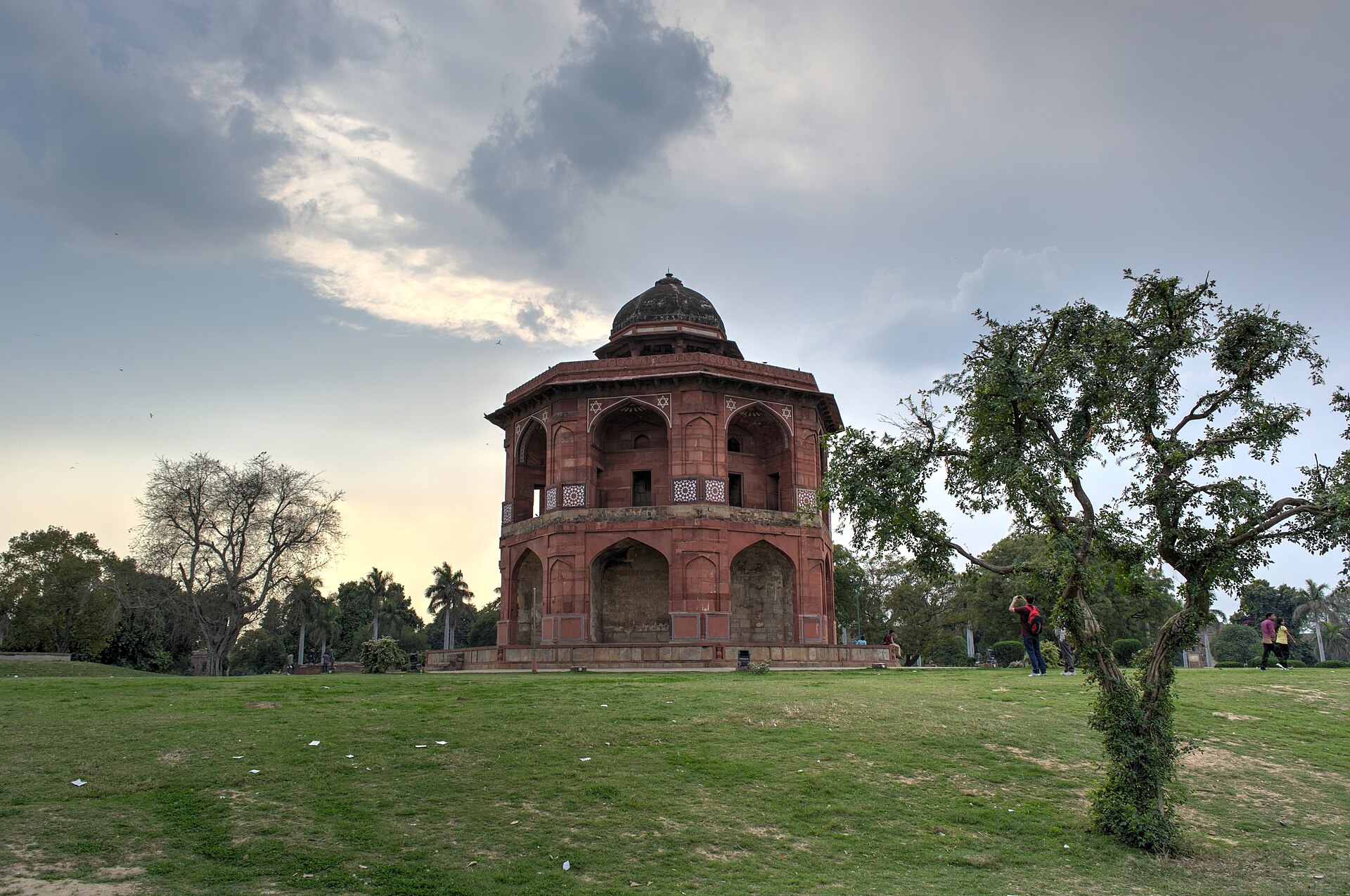
The Indian state's response was improvised at enormous scale. A Ministry of Relief and Rehabilitation was created. Camps were opened wherever there was space, including at Kurukshetra in Haryana, which held a refugee population large enough to constitute a city, and in Delhi at Purana Qila and around Humayun's Tomb, where displaced families camped among Mughal monuments. Legislation on evacuee property, culminating in the Administration of Evacuee Property Act of 1950, vested the abandoned assets of those who had left in a custodian, and a compensation and rehabilitation framework later allowed refugees to claim against that pool, though claims were routinely settled at a fraction of what had been lost and verification was a bureaucratic ordeal.
Physical rebuilding followed. Delhi's population roughly doubled in a few years and the new colonies built for refugees, among them Lajpat Nagar, Rajinder Nagar, Patel Nagar and Punjabi Bagh, still carry that history in their street grids and market layouts. Faridabad was developed as a new industrial township for refugees from the North West Frontier Province. Ulhasnagar, near Bombay, was created out of a wartime military transit camp to house Sindhi families and remains a Sindhi commercial centre. Above all, because Lahore had gone to Pakistan, East Punjab needed a capital, and the government commissioned an entirely new city at Chandigarh, planned from 1951 under the French Swiss architect Le Corbusier with Pierre Jeanneret, Maxwell Fry and Jane Drew. It is the only major world city whose existence is a direct architectural consequence of a partition.
Bengal, where the movement never quite stopped
The eastern story followed a different rhythm and is less well known outside the region. Bengal saw appalling violence in 1946, notably in Calcutta and Noakhali, but the 1947 division did not produce a single decisive exchange. Instead migration from East Bengal, later East Pakistan, into West Bengal, Assam and Tripura continued in waves for a quarter of a century, driven by episodes of communal violence, property insecurity and the gradual squeezing out of Hindu professional and landholding families. Muslims also moved eastward, but far fewer, and the asymmetry created a lasting political problem in West Bengal and Assam.
In April 1950, after severe violence in both Bengals, Jawaharlal Nehru and Liaquat Ali Khan signed an agreement in Delhi, usually called the Nehru to Liaquat Pact, under which each government undertook to protect its minorities, restore looted property and allow refugees to return to dispose of assets. It slowed the flow but did not stop it. Further surges followed disturbances in 1950 and 1964, and the 1971 war of Bangladeshi independence pushed a very large refugee population, described at the time in the millions, into India before most returned after Bangladesh's creation in December 1971.
Rehabilitation in the east was also harsher. Because the influx was continuous rather than a single shock, and because West Bengal had limited land, the central government promoted resettlement outside the region, most controversially through the Dandakaranya Project from the late 1950s, which moved Bengali refugee families to forested tracts across present day Chhattisgarh and Odisha where soil, language and neighbours were all unfamiliar. Many drifted back. The attempt by some of these families to settle on Marichjhapi island in the Sundarbans ended in a violent eviction by the West Bengal government in 1979, an episode still disputed as to numbers and responsibility.
Partition's legal residue outlasted the camps. Articles 5 to 11 of the Indian Constitution had to be drafted specifically to deal with people who had migrated to or from Pakistan, and questions of documentation, domicile and belonging that begin in 1947 continue to surface in Indian public life, including in the debates over the National Register of Citizens in Assam. For families, the residue is different and simpler: property left behind, relatives on the other side of a border that has been difficult to cross for most of its existence, and a set of place names that mean home to people who have never seen them.
References
- The British LibraryIndia Office Records and the Partition of India
- Encyclopaedia BritannicaPartition of India
- The 1947 Partition ArchiveOral history collection on Partition
- National Archives of IndiaNational Archives of India
- UNHCRThe State of the World's Refugees
This is a reference article, written from the sources above. It is background, not news reporting.