
The President's Role in the Republic
Reference library · 1100 words

India's Constitution says, in Article 53, that the executive power of the Union is vested in the President. Read alone, that sentence suggests an enormously powerful office. Read alongside Article 74, which requires the President to act in accordance with the advice of the Council of Ministers headed by the Prime Minister, it describes something quite different: a head of state who holds formal authority while the substance of governing sits elsewhere. Understanding the presidency means understanding the space between those two articles, because that space is narrow, real, and occasionally decisive.
The office is deliberately not a popular one in the electoral sense. The President is chosen by an electoral college made up of the elected members of both houses of Parliament together with the elected members of the legislative assemblies of the states, with Delhi and Puducherry added by amendment. Voting uses a single transferable vote with proportional representation, and the votes are weighted so that a legislator from a populous state carries more weight than one from a small state, while the total weight of members of Parliament is balanced against the total weight of state legislators. The population figures used for the weighting are still those of the 1971 census, frozen to avoid penalising states that reduced their birth rates. The design has a clear purpose: it makes the President a creation of the federation as a whole rather than of any single party's national vote, and it keeps the office out of direct competition with the Prime Minister for democratic legitimacy. The term is five years, and re-election is permitted, although only Rajendra Prasad, the first President, has served twice.
What the President actually does
Most presidential functions are ceremonial in effect but constitutionally necessary. The President appoints the Prime Minister and, on the Prime Minister's advice, the other ministers. The President appoints state governors, judges of the Supreme Court and high courts through the process the judiciary and executive share, the Comptroller and Auditor General, the Attorney General, and members of the Election Commission. Every Act of Parliament requires presidential assent before it becomes law. Money bills cannot even be introduced without the President's recommendation. Parliament is summoned, prorogued and, in the case of the Lok Sabha, dissolved by the President, and each year the first session opens with a presidential address to both houses that sets out the government's programme, written for the President by the government.
Three powers carry more weight than the ceremonial list suggests. Under Article 123 the President may promulgate ordinances when Parliament is not in session, giving temporary force of law to measures that must later be approved by Parliament. Under Article 72 the President may grant pardons, reprieves and commutations, including in capital cases, which is the one power exercised over an individual life. Under Article 143 the President may refer a question of law or fact of public importance to the Supreme Court for its opinion, a route used in constitutionally contested moments. Article 356, which allows the President to assume the functions of a state government when constitutional machinery has failed, is formally a presidential power and in practice a central government one, and its repeated use to dismiss state governments led the Supreme Court in the 1994 Bommai judgment to make such proclamations reviewable by the courts.
The narrow margin of independence
Whether presidential advice was binding was left ambiguous in the original text and then settled by amendment. The Forty second Amendment of 1976, passed during the Emergency, made it explicit that the President shall act in accordance with ministerial advice. The Forty fourth Amendment of 1978, passed after the Emergency by the government that replaced it, added the one qualification that survives: the President may require the Council of Ministers to reconsider its advice, but must act on the advice tendered after that reconsideration. This is a delay, not a veto, and it is the whole of the President's formal discretion over policy.
Beyond that there is a residual and much argued category. Because the Constitution sets no deadline for assent to a bill, a President can in principle simply not sign, an option commentators call a pocket veto. Zail Singh declined to act on the Indian Post Office Amendment Bill in 1986, and the bill never became law. The other genuinely discretionary moment comes when no party holds a majority in the Lok Sabha and the President must judge who is most likely to command confidence. Presidents faced this repeatedly during the coalition period, and K. R. Narayanan in the late 1990s established the practice of requiring documentary evidence of support before inviting a claimant to form a government, which reduced the scope for a President to be manoeuvred.
The office can also fail. In June 1975, President Fakhruddin Ali Ahmed signed the proclamation of internal emergency on the advice of Indira Gandhi's cabinet, at night and with the cabinet itself informed only afterwards. Nothing in the constitutional design prevented it, and the episode remains the standard illustration of how little independent protection the presidency offers when a government is determined and holds a large majority. Removal of a President, by contrast, is close to theoretical: impeachment under Article 61 requires a resolution passed by a two thirds majority of the total membership of each house, and no President has faced the process.
The symbolic weight
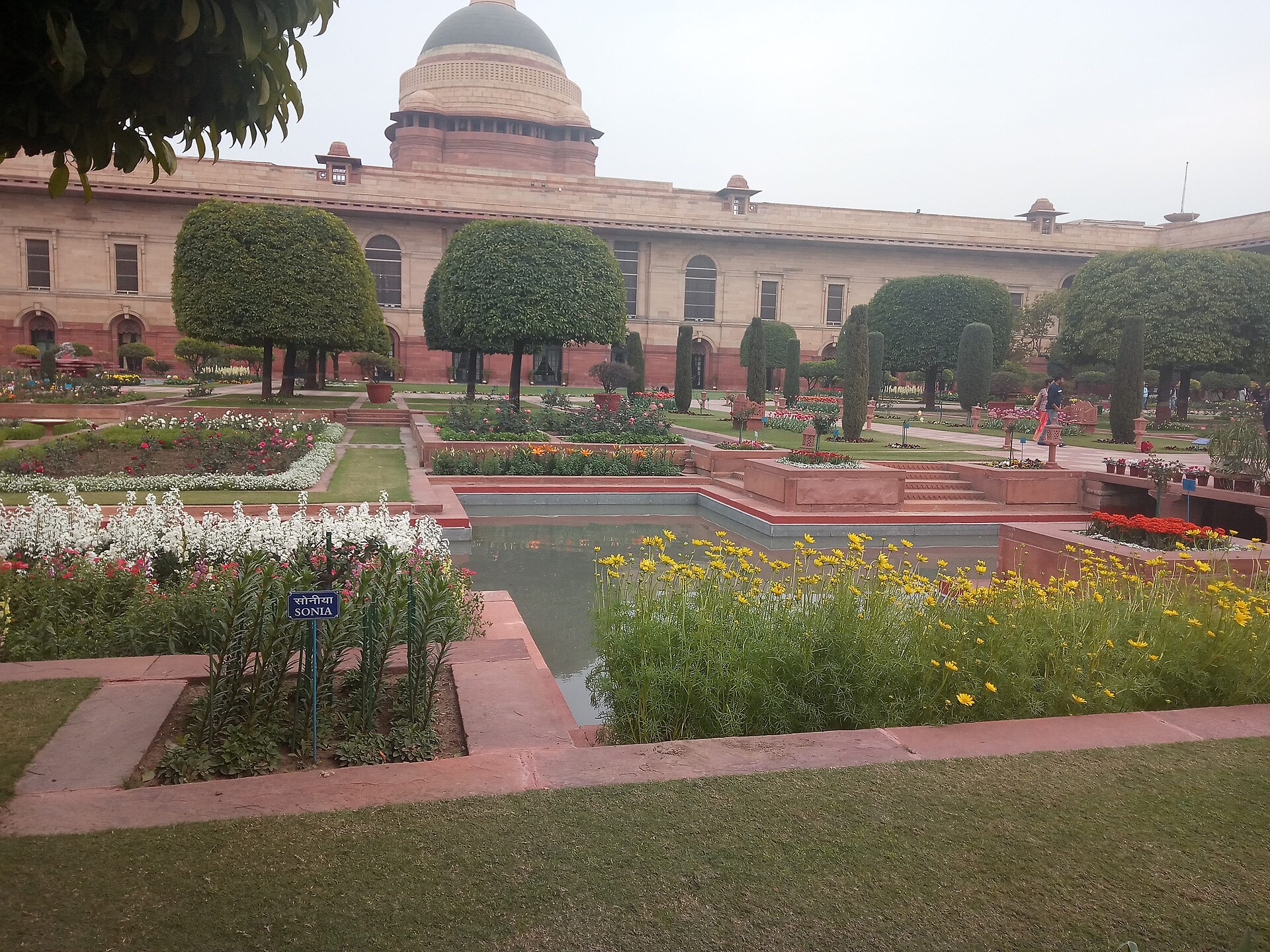
The residence is Rashtrapati Bhavan in New Delhi, designed by Edwin Lutyens for the Viceroy and completed in the early 1930s, a building of several hundred rooms whose transfer from imperial to republican use in January 1950 was itself a statement. Presidents have used the office's visibility in different ways. S. Radhakrishnan, a philosopher, gave it an intellectual character. A. P. J. Abdul Kalam, an aerospace engineer who had worked on India's missile and space programmes and who served from 2002 to 2007, drew unusual public affection, particularly among schoolchildren, without exceeding his constitutional limits. The presidency has also been used to mark inclusion: K. R. Narayanan was the first Dalit President, Pratibha Patil the first woman, and Droupadi Murmu, who took office in 2022, the first from a Scheduled Tribe. Critics of the office argue that it is an expensive formality and that its occupants are chosen for reliability rather than independence. Defenders argue that a ceremonial head of state who cannot be identified with the governing party is precisely what allows a parliamentary system to change governments without a crisis of legitimacy. The evidence supports both positions, which is roughly what one should expect of a reserve power designed to be used rarely.
References
- President of IndiaThe President of India: official website
- Constitution of India project, CLPRConstitution of India
- PRS Legislative ResearchPRS Legislative Research
- Encyclopaedia BritannicaIndia: government and society
This is a reference article, written from the sources above. It is background, not news reporting.