
The Prime Minister's Office and Executive Power
Reference library · 1062 words
.jpg)
India's Constitution says surprisingly little about the Prime Minister. Article 74 provides that there shall be a Council of Ministers with the Prime Minister at its head to aid and advise the President, and Article 75 says the President appoints the Prime Minister and, on the Prime Minister's advice, the other ministers, who are collectively responsible to the Lok Sabha, the directly elected lower house. That is close to the whole of it. There is no constitutional description of the Prime Minister's Office, no list of prime ministerial powers, and no rule about how the office should be staffed. The enormous machinery that now surrounds the head of government in New Delhi grew up in the space the Constitution left blank, which is why understanding it requires looking at practice rather than text.
The formal architecture rests on the idea that executive power is vested in the President but exercised on ministerial advice. For the first quarter century of the republic that convention was understood rather than written down. The Forty second Amendment of 1976, passed during the Emergency, made it explicit that the President shall act in accordance with the advice of the Council of Ministers. The Forty fourth Amendment of 1978, passed by the government that followed, softened this slightly by allowing the President to return advice once for reconsideration, after which the President must accept whatever comes back. The practical result is that the Prime Minister, as long as he or she commands a majority in the Lok Sabha, controls the executive power of the Union.
How the office actually works
The Prime Minister's Office is a government department in all but name, staffed by career civil servants rather than by party appointees, and headed by a Principal Secretary who is usually a retired or serving officer of the Indian Administrative Service or the Indian Foreign Service. It began life as the Prime Minister's Secretariat under Jawaharlal Nehru and was renamed the Prime Minister's Office in 1977 by the Janata government of Morarji Desai, partly as a gesture against the concentration of power that had preceded it. The name stuck; the concentration did not reverse for long.
The office is often confused with the Cabinet Secretariat, which is a separate institution headed by the Cabinet Secretary, the senior most civil servant in the country. The division is roughly this. The Cabinet Secretariat services the Cabinet and its committees as an institution, circulating papers, recording decisions, and coordinating between ministries under the Government of India Transaction of Business Rules and Allocation of Business Rules. The Prime Minister's Office serves the Prime Minister personally: it processes the files that come to him, prepares his briefs, manages his correspondence and public communication, handles the departments he holds directly, and increasingly monitors delivery of flagship programmes across ministries. Because the Prime Minister chairs the Appointments Committee of the Cabinet, senior appointments across the civil service pass through this office, which is a quiet but formidable lever.
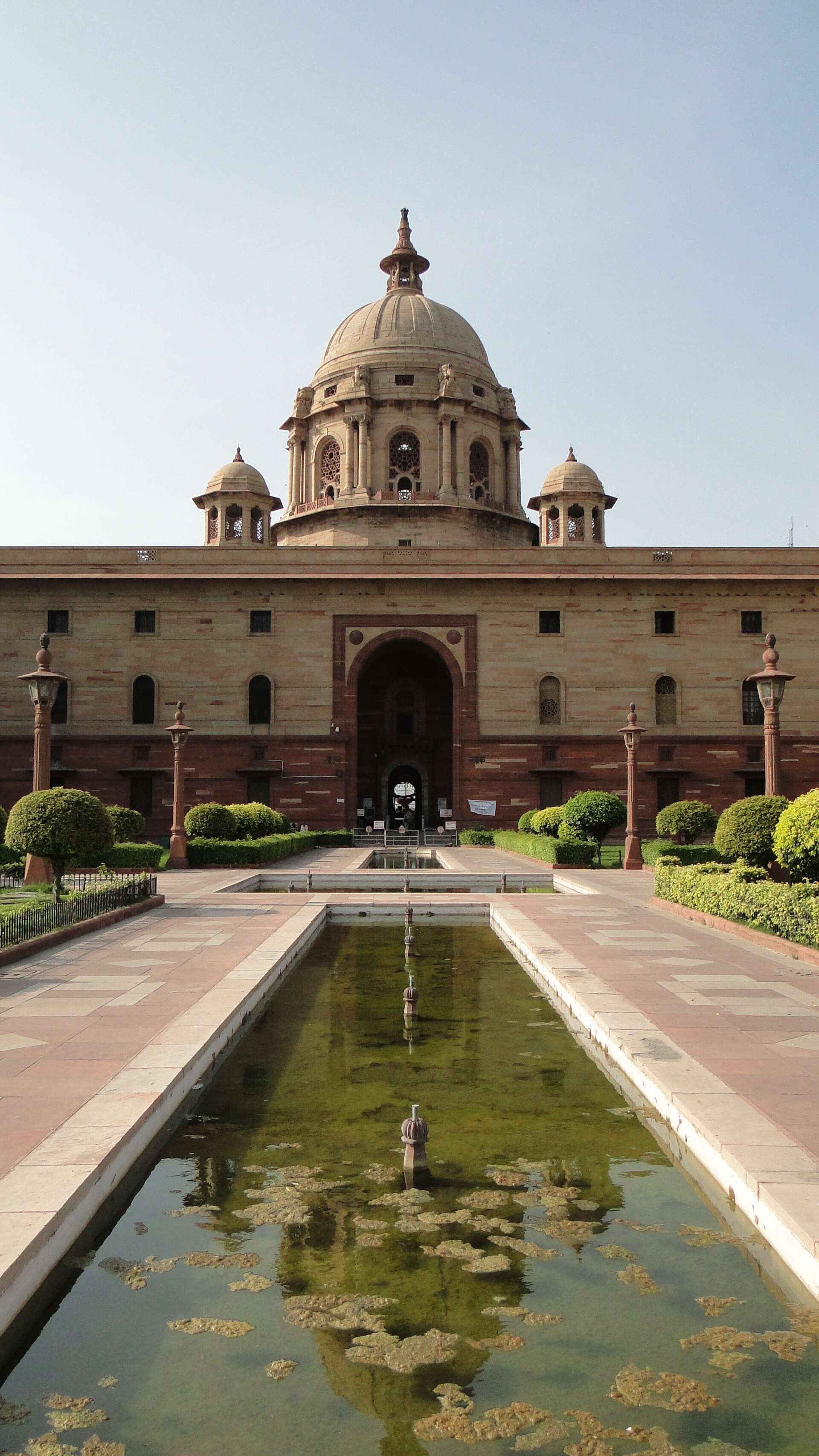
Several bodies attach themselves to the Prime Minister rather than to any ministry. The Department of Atomic Energy and the Department of Space report to the Prime Minister rather than to a line minister, a legacy of the founding years when both were treated as strategic. The Prime Minister chairs the Cabinet Committee on Security, which takes decisions on defence, intelligence and major national security questions, and the Cabinet Committee on Economic Affairs. Since 1998 a National Security Adviser has sat at the centre of the security apparatus, working out of the Prime Minister's Office rather than from any ministry; the first holder of the post also served simultaneously as Principal Secretary, which shows how much authority could be gathered in a single desk. When the Planning Commission was wound up at the end of 2014 and replaced by NITI Aayog in January 2015, the Prime Minister became its chairperson, so long term policy advice also reports upward rather than sideways.
Why the office grew
The expansion was not planned. Under Nehru the secretariat was small and the Cabinet genuinely deliberated. Under Indira Gandhi in the late 1960s and 1970s the secretariat grew into a parallel centre of decision making, with a powerful Principal Secretary drafting policy that had previously originated in ministries. Several forces pushed in the same direction. Ministries were numerous and slow, and a Prime Minister who wanted anything delivered quickly needed her own staff to chase it. Foreign policy and national security demanded fast, confidential decisions that a large Cabinet could not take. And once a leader became the face of a national election campaign, the machine that produced her public presence naturally sat close to her.
The coalition years between 1989 and 2014 partly reversed this. When a Prime Minister headed a government of a dozen parties, the allocation of ministries was a negotiated settlement, allies protected their departments, and the Prime Minister's Office had less room to override them. Since 2014, single party majorities in the Lok Sabha have restored and arguably exceeded the earlier concentration, and commentary about a Prime Minister's Office that operates as the effective government of India has become routine in Indian political writing.
Whether this is a problem is genuinely contested. One argument holds that the Constitution intended Cabinet government, that Article 74 speaks of a Council of Ministers rather than a chief executive, and that when files are decided in the Prime Minister's Office by unelected officials, ministerial responsibility to Parliament becomes a fiction. The counter argument is that every modern parliamentary system has seen the same drift, that the British and Australian centres have grown similarly, that a country of India's size requires a coordinating centre with real capacity, and that the Prime Minister remains removable by a vote of the Lok Sabha in a way that no official is.
Both are partly right. The check on the office is genuinely political rather than legal: no court supervises how a Prime Minister organises his own staff, but a Prime Minister who loses his majority loses everything overnight, as happened in 1979, 1990, 1997 and 1999. India's Prime Ministers have been at their weakest not when the office was small but when the arithmetic in the lower house was thin, which suggests that the real constitution of executive power in India is written in election results rather than in the file flow of South Block.
References
- Prime Minister's Office, Government of IndiaPrime Minister's Office
- Cabinet Secretariat, Government of IndiaCabinet Secretariat
- Legislative Department, Government of IndiaThe Constitution of India
- Encyclopaedia BritannicaIndia: Government and society
- NITI AayogAbout NITI Aayog
This is a reference article, written from the sources above. It is background, not news reporting.