The Symbolism of Light in Indian Festivals
Reference library · 1058 words

If you had to choose one physical object to represent religious practice in India, a reasonable candidate would be a small clay bowl with a pinched lip, filled with oil, holding a twisted cotton wick. The diya costs almost nothing, is made by hand from river clay, burns for a few hours and is then discarded or reused. Multiplied by hundreds of millions across a single night, it produces the most recognisable image of Indian festival life. The reasons that lamps carry such weight are older than any of the festivals they now mark, and they are more varied than the popular summary of light defeating darkness suggests.
Fire is the oldest continuously worshipped presence in Indian religion. The Rigveda, the earliest surviving Sanskrit text, opens with a hymn addressed to Agni, the fire that carries offerings between the human and the divine and is therefore the necessary intermediary of every sacrifice. Vedic ritual was built around maintained fires, and the domestic hearth fire had its own ritual status. When temple worship developed, fire persisted in the form of the lamp and the camphor flame circled before an image during aarti, and in the tall standing brass lamps of the south such as the Tamil kuthuvilakku and the Kerala nilavilakku. Lighting a lamp in front of a deity is not primarily decorative; it is the residue of a sacrificial system in which fire was the mechanism of transmission.
The metaphorical layer is equally old. The Brihadaranyaka Upanishad contains a prayer that is among the most widely recited lines in Indian religious life, asking to be led from the unreal to the real, from darkness to light, and from death to immortality. The darkness in question is ignorance and the light is knowledge, not moral virtue and vice. This distinction matters, because the popular gloss of light as good and darkness as evil, common in modern festival publicity, imports a moral dualism that the Upanishadic formulation does not contain. Both readings circulate today, and they coexist without much friction.
One festival, many stories
Deepavali, literally a row of lamps, is the festival where all of this converges, and it is a good illustration of how Indian festivals actually work: a common practice with regionally distinct explanations attached to it. In much of northern India the festival marks the return of Rama to Ayodhya after fourteen years of exile and the defeat of Ravana, with the lamps representing the illumination of the city to welcome him. In the south, the preceding day is Naraka Chaturdashi, commemorating Krishna's killing of the demon Narakasura, and the observance includes a ritual oil bath before dawn. In Gujarat and much of western India the principal rite is the worship of Lakshmi, and the day after Deepavali begins the commercial new year, when traders open new account books. In Bengal, the same night is Kali Puja, dedicated to a goddess whose iconography is anything but gentle. None of these accounts is the correct one, and attempts to declare a single national meaning generally reflect politics rather than scholarship.
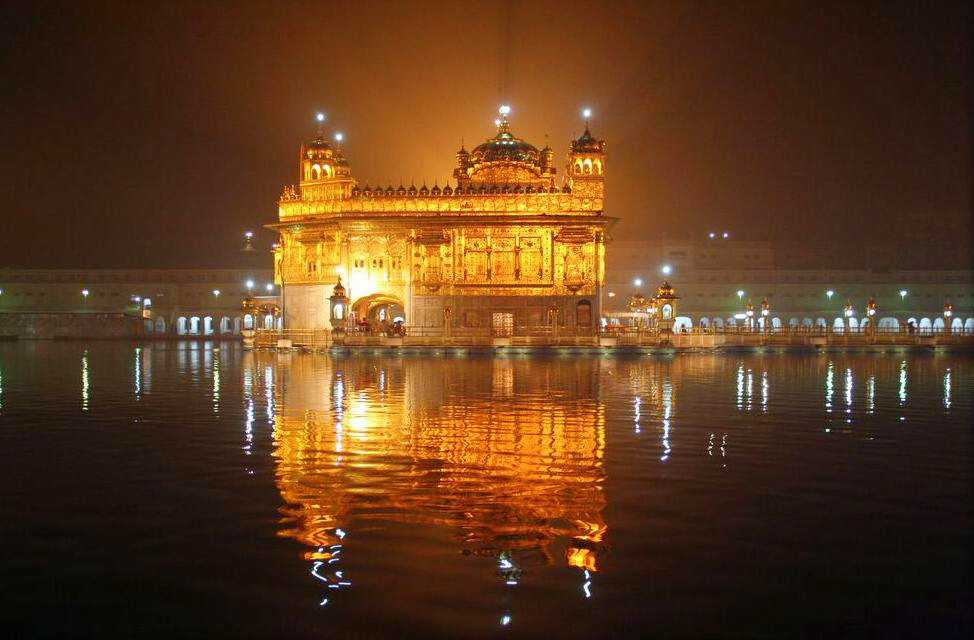
Other traditions observe the same days for entirely different reasons. Jains mark the nirvana of Mahavira, the twenty fourth Tirthankara, at Pavapuri in what is now Bihar, and the lamps are traditionally explained as compensating for the light that departed the world with him. Sikhs observe Bandi Chhor Divas, commemorating the release of the sixth Guru, Hargobind, from imprisonment at Gwalior Fort, and his insistence on securing the release of imprisoned princes along with his own; the Golden Temple at Amritsar is illuminated and the reflection of the lamps in the surrounding pool is among the most photographed scenes in India. That three distinct religious traditions light the same lamps on the same nights for unrelated reasons is a fairly precise summary of how the Indian festival calendar has developed.
Beyond Deepavali
Light festivals are not confined to that one night. Karthigai Deepam in Tamil Nadu, falling in the month of Karthigai when the moon aligns with the Krittika asterism, fills houses with rows of lamps and culminates at the Arunachaleswarar temple in Thiruvannamalai, where an enormous beacon of ghee soaked cloth is lit on the summit of Arunachala hill and can be seen for many kilometres. The hill itself is understood in local theology as a manifestation of Shiva as a column of fire, which makes the beacon a re enactment rather than a symbol. In Varanasi, Dev Deepawali is observed on the full moon of the month of Kartik, when the stone ghats descending to the Ganges are lined with lamps and earthen lamps are floated on the river; the modern scale of the observance is substantially a recent development, promoted by the city and by tourism, built on an older ritual base.
The Kerala harvest festival of Onam and the Tamil harvest festival of Pongal both involve lamps in domestic ritual, and Vesak, marking the birth, enlightenment and death of the Buddha, is observed with lanterns across Buddhist Asia and by Indian Buddhist communities. Christmas illumination in Kerala, Goa and the north east, and the lights strung across markets during Ramadan and Eid in Hyderabad, Delhi and Lucknow, extend the same visual vocabulary across religious boundaries. In practice, illumination in India is less a marker of a particular faith than a shared idiom for public celebration.
The modern complication is that light has come to mean noise and smoke. Firecrackers are a late addition to Deepavali, made possible by industrial manufacturing, concentrated for decades in Sivakasi in Tamil Nadu, and they have turned a lamp festival into a serious annual air quality event in the northern plains, where post monsoon meteorology already traps pollutants. The Supreme Court of India has issued a series of orders restricting the sale and use of conventional firecrackers, permitting only lower emission formulations described as green crackers and limiting the hours of use, and state governments in and around Delhi have imposed outright seasonal bans. Enforcement is inconsistent and the orders are politically contested, with critics framing them as targeting a Hindu festival specifically and defenders pointing to hospital admission data. The dispute has had one clear cultural effect: a visible movement, particularly among urban families, back toward lamps, which is a return to the older form of the festival arrived at by an entirely modern route.
References
- Victoria and Albert MuseumDiwali and the festival of lights
- Encyclopaedia BritannicaDiwali
- Central Pollution Control Board, Government of IndiaAmbient air quality during festival periods
- SahapediaKarthigai Deepam at Thiruvannamalai
This is a reference article, written from the sources above. It is background, not news reporting.