
The Union Public Service Commission Explained
Reference library · 990 words

Every year, roughly a million Indians register for an examination that will select a few hundred of them. The Civil Services Examination conducted by the Union Public Service Commission, universally known as the UPSC, is the gateway to the Indian Administrative Service, the Indian Police Service, the Indian Foreign Service and a long list of other central services. Its success rate is well under one per cent. Around it has grown an entire economy of coaching institutes, residential neighbourhoods in Delhi given over to aspirants, publishing houses, and a genre of memoir and film. Understanding the UPSC is close to a precondition for understanding how India is governed.
A constitutional body, not a government department
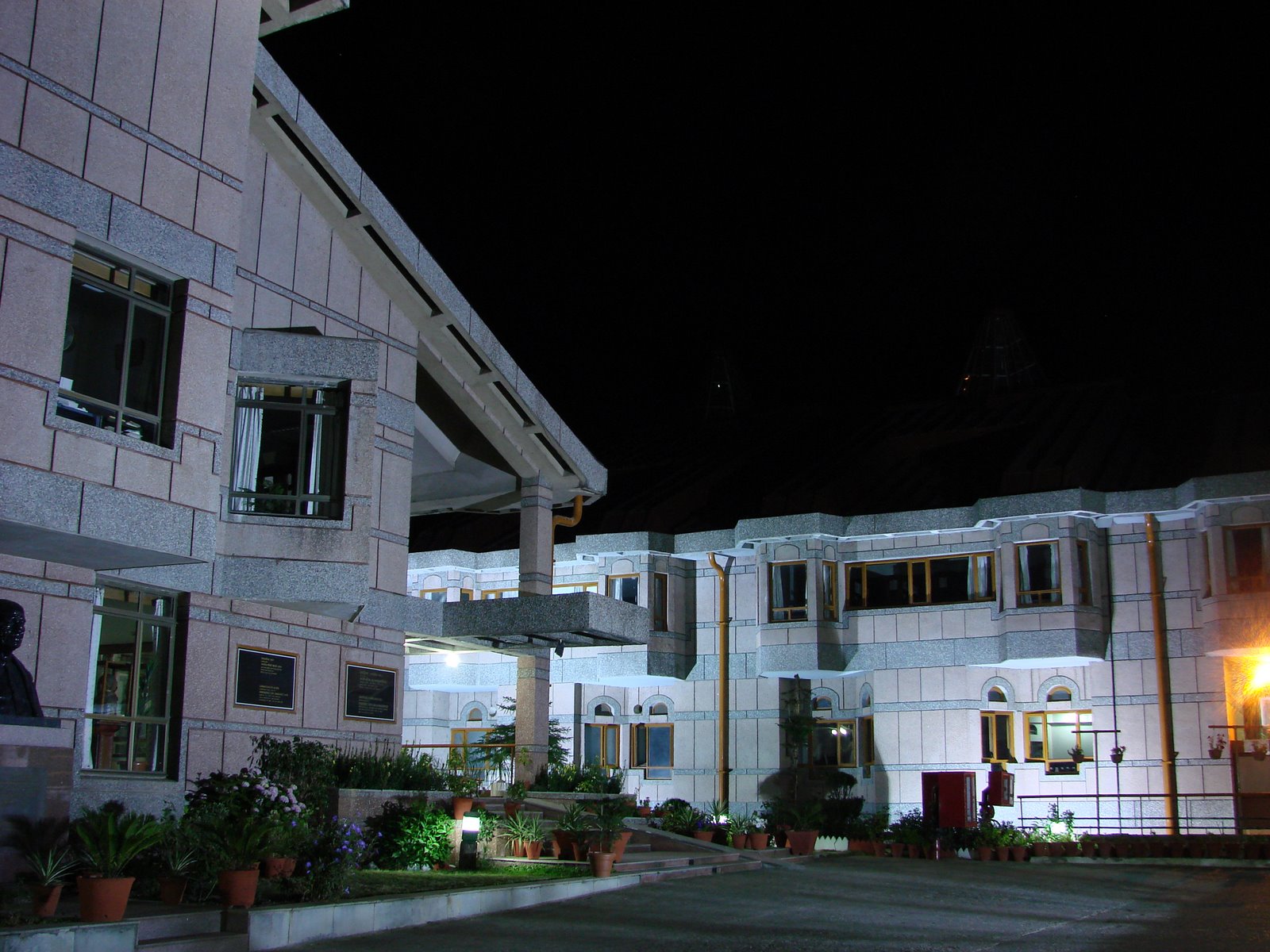
The Commission is not an office of the executive. It is established by Articles 315 to 323 of the Constitution, which also provide for equivalent commissions in each state. Its chairman and members are appointed by the President, hold office for six years or until the age of sixty five, whichever comes first, and can be removed only on grounds of misbehaviour after an inquiry by the Supreme Court. Its expenses are charged on the Consolidated Fund of India, meaning Parliament does not vote on them annually and cannot squeeze the body financially. The institutional lineage runs back to the Public Service Commission set up in 1926 under the Government of India Act 1919, following the recommendations of the Lee Commission, and then to the Federal Public Service Commission created under the Government of India Act 1935. The present body dates from the commencement of the Constitution in January 1950 and sits at Dholpur House on Shahjahan Road in New Delhi.
The insulation is deliberate. The point of a constitutional recruiting body is that ministers cannot appoint their supporters to the permanent bureaucracy. The Commission's remit is broader than the famous examination: it advises on promotions and transfers between services, on disciplinary matters affecting civil servants, and on the principles governing appointments, and it must submit an annual report to the President which is laid before Parliament together with a memorandum explaining any case where its advice was not accepted. That last provision is a small but real accountability device, because departures from the Commission's advice have to be justified in public.
How the examination works
The Civil Services Examination runs in three stages across roughly a year. The Preliminary examination, held in the middle of the year, consists of two objective papers: a general studies paper and an aptitude paper known as CSAT, the second of which is qualifying only, requiring a minimum score rather than counting toward the final rank. The Preliminary stage is purely a filter; its marks are discarded once candidates progress.
The Main examination, held some months later, is written and long. It comprises essay papers, four general studies papers covering Indian heritage and culture, governance and polity, economy and international relations, and ethics and integrity, together with two papers in an optional subject chosen by the candidate from a long list that includes anthropology, geography, public administration, literature of various Indian languages, and the sciences. There are also qualifying papers in English and in one Indian language from the Eighth Schedule. The written stage rewards structured argument under severe time pressure rather than recall alone.
Those who clear the Main examination face a Personality Test, an interview before a board that probes the candidate's stated interests, home district, work experience and judgement. The final merit list combines the Main examination and interview marks. Allocation to a particular service and cadre state then follows from rank, from the candidate's stated preferences, and from reservation categories. Successful candidates enter training, most notably at the Lal Bahadur Shastri National Academy of Administration at Mussoorie in Uttarakhand for the administrative service and the Sardar Vallabhbhai Patel National Police Academy at Hyderabad for the police service.
Criticisms, reforms and the social question
The system attracts consistent criticism from several directions. One line of attack concerns the optional subject: because different subjects are marked by different examiners against different disciplinary conventions, candidates and scholars have argued that scoring is not comparable across options, and successive committees have recommended reducing or removing the optional papers. Another concerns the age and attempt limits, which have been revised repeatedly and which shape whether the service recruits people in their early twenties or in their thirties after other careers.
A third and larger debate concerns social composition. Reservations for Scheduled Castes, Scheduled Tribes and Other Backward Classes apply, as does the more recent quota for economically weaker sections, and the profile of the services has broadened considerably since the 1950s when they were drawn heavily from a narrow urban elite. Yet the cost of preparation, which for many means two or three years living in Delhi or another coaching centre without income, still filters entrants by family resources. Successive governments have also experimented with lateral entry, appointing specialists directly to senior posts, which supporters see as bringing scarce expertise and opponents see as a route around the constitutional recruiting process and its reservation rules.
There is a further structural argument that has nothing to do with the examination itself. A generalist selected at twenty four may spend a career moving between education, revenue, health and industry portfolios every few years. Critics say modern government needs deeper domain knowledge and longer tenures; defenders say the generalist administrator is precisely what holds together a district containing several million people and every conceivable problem, and that frequent transfers are a political disease rather than a design feature.
What is not seriously contested is the Commission's integrity as an examining body. In a country where public recruitment scandals are common at state level, the UPSC's papers and marking have retained a reputation for cleanliness that is central to the legitimacy of the whole apparatus. That reputation, more than any curriculum choice, is what a million people are trusting when they register each year.
References
- Union Public Service CommissionUPSC official website
- Government of IndiaThe Constitution of India (Articles 315 to 323, Public Service Commissions)
- Lal Bahadur Shastri National Academy of AdministrationAbout the Academy
- Department of Personnel and Training, Government of IndiaCivil services administration and recruitment rules
This is a reference article, written from the sources above. It is background, not news reporting.