
Translation and India's Literary Bridges
Reference library · 1096 words

India has twenty two languages listed in the Eighth Schedule of the Constitution, several with literary traditions more than a thousand years old, and no single language that all its readers share. That condition makes translation less a specialism than a basic infrastructure. A Kannada novel reaches a Bengali reader only if someone carries it across, and for most of the past two centuries the vehicle for that crossing has been a third language rather than a direct route.
From the Mughal court to the Orientalists
Organised literary translation in India is much older than the colonial period. The Mughal emperor Akbar established a translation bureau at his court in the 1580s, where Sanskrit works were rendered into Persian, the language of administration and high culture. The Mahabharata became the Razmnama, the book of war, produced in illustrated manuscript copies. In 1657 Akbar's great grandson Dara Shukoh completed a Persian translation of the Upanishads under the title Sirr-i-Akbar, the greatest secret, arguing that the monotheism he found there was consistent with the Quran. That single act had consequences no one could have predicted: the Persian text reached Europe through a Latin version published by the French scholar Anquetil-Duperron in 1801, and it was in that doubly translated form that Schopenhauer read the Upanishads and declared them the consolation of his life.
The British Orientalists of Calcutta produced the next wave. Charles Wilkins published an English Bhagavad Gita in 1785, the first substantial translation from Sanskrit directly into a European language, with a preface by the Governor General Warren Hastings. William Jones followed in 1789 with Kalidasa's Sakuntala, which was translated onward into German within two years and provoked an enthusiasm among the German Romantics that shaped nineteenth century European ideas of India. Max Muller then edited the Sacred Books of the East, a series of fifty volumes issued from Oxford between 1879 and 1910, which made Indian religious texts available to a scholarly readership on a scale that had no precedent.
A parallel and less glamorous project mattered as much for Indian prose itself. Missionary presses, above all the Baptist press at Serampore near Calcutta where William Carey and his colleagues worked from the beginning of the nineteenth century, translated the Bible into dozens of Indian languages and dialects. In doing so they had to make choices about spelling, punctuation, grammar and vocabulary for languages that had strong poetic traditions but little printed prose. Those choices, together with the type they cut, fed directly into the standardisation of modern written Bengali, Marathi, Oriya and others.
The hinge of English
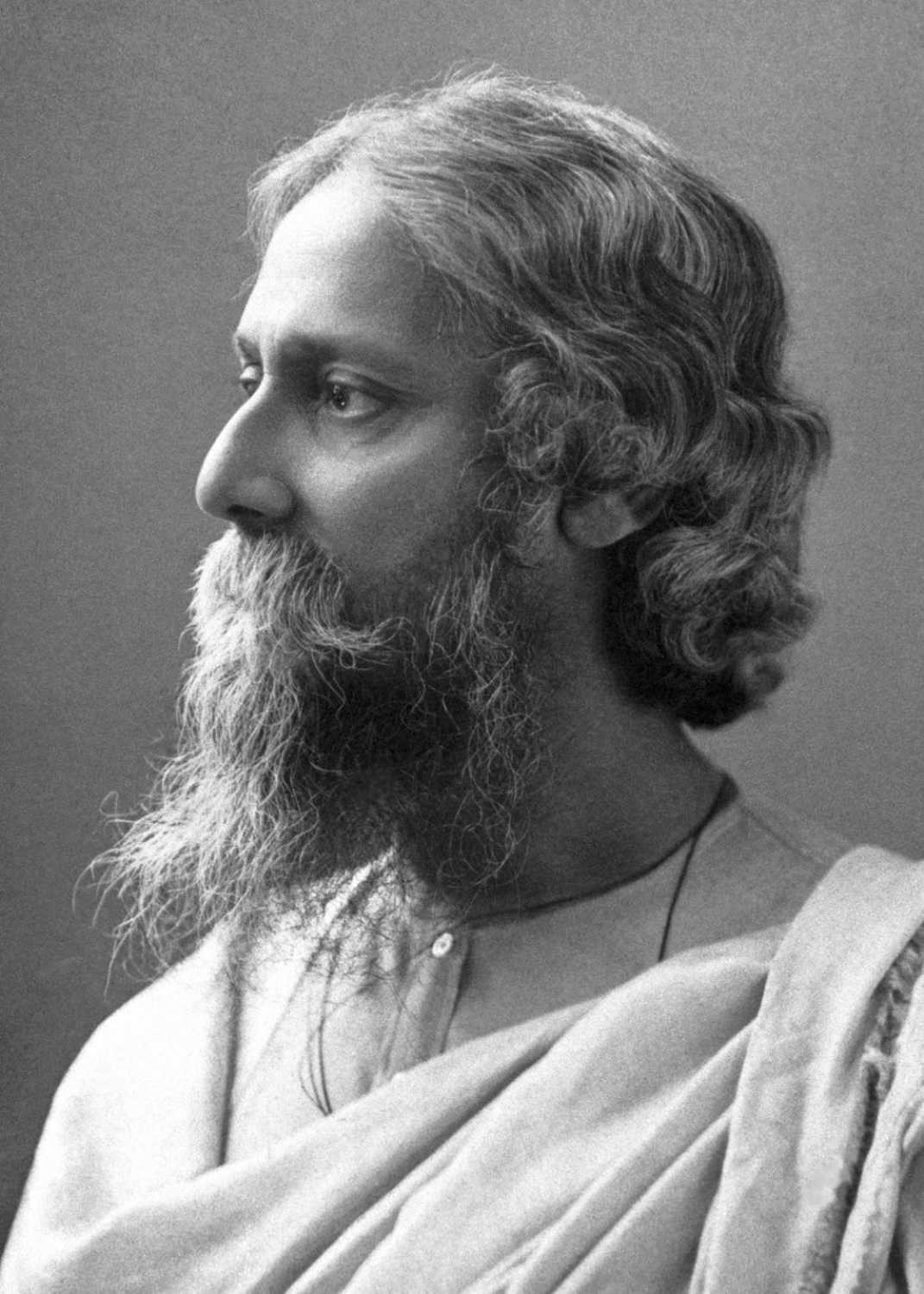
The twentieth century's most famous Indian translation was a self translation. Rabindranath Tagore rendered a selection of his own Bengali songs into English prose as Gitanjali, published in London in 1912 with an introduction by W. B. Yeats, and won the Nobel Prize in Literature the following year. The episode is instructive precisely because it is not a straightforward success. Bengali readers have long argued that the English version, with its devotional cadence borrowed from the King James Bible, flattened poetry that in the original is metrically intricate and far less solemn. Tagore's international reputation was built on a version of himself that his own readers did not recognise, and his subsequent decline in Western esteem owed something to that mismatch.
The scholar and poet A. K. Ramanujan changed what English translation from Indian languages could be. His versions of classical Tamil poetry in The Interior Landscape and Poems of Love and War, and of the Kannada vachanas in Speaking of Siva, used spare modern English and short lines, with afterwords that taught readers the conventions they were encountering rather than smoothing them away. His essay on the many tellings of the Ramayana, which argued that there is no single original but a family of related narratives, became one of the most cited pieces of writing on Indian literature, and also, decades later, the subject of a bitter dispute when it was removed from a Delhi University syllabus after protests.
Recent recognition has come quickly. Geetanjali Shree's Ret Samadhi, translated by Daisy Rockwell as Tomb of Sand, won the International Booker Prize in 2022, the first book originally written in an Indian language to do so. Banu Mushtaq's Kannada stories, translated by Deepa Bhasthi as Heart Lamp, won the same prize in 2025. Domestic prizes and translation focused imprints, including Seagull Books in Calcutta and the translation lists of the major trade publishers, have built a visible market where twenty years ago there was mainly institutional publishing.
Who actually does the work
Behind the prizes sits a structural problem that practitioners discuss constantly. Almost all traffic runs through English. A Malayalam novel is very unlikely to be translated directly into Marathi; it is translated into English, and a Marathi publisher may then commission a version from the English, which is a translation of a translation with all the losses that implies. The Sahitya Akademi, the national academy of letters established in the mid 1950s, exists partly to fix this, publishing across two dozen languages and awarding an annual prize for translation, and the National Translation Mission, based at the Central Institute of Indian Languages in Mysuru, works on rendering academic and knowledge texts into Indian languages so that a student can study science or economics in Odia. Both are useful and both are small relative to the need.
The economics are unforgiving. Very few people in India make a living from literary translation alone; most are academics, journalists or writers doing it partly out of conviction. Fees are typically low, contracts have historically been weak on royalties and even on cover credit, though prize wins have improved the standing of translators considerably. There is also a live argument about who should translate what, sharpened by the growth of Dalit writing in translation, including Bama's Karukku from Tamil and Omprakash Valmiki's Joothan from Hindi. One position holds that a translator's social distance from the material risks blunting it; another holds that competence in the two languages is what counts and that gatekeeping by identity would shrink an already thin field.
What is not disputed is the stake. Machine translation is improving quickly for high resource languages, and the government has invested in speech and text translation systems for Indian languages. Those tools will handle notices, forms and subtitles well. They are unlikely to handle a vachana or a Bengali metre, which means the human bridge between India's literatures will still have to be built one book at a time.
References
- Sahitya AkademiTranslation Prize and Publication Programme
- Central Institute of Indian LanguagesNational Translation Mission
- The Booker PrizesTomb of Sand by Geetanjali Shree, translated by Daisy Rockwell
- The Nobel FoundationRabindranath Tagore: Nobel Prize in Literature 1913
- Internet Sacred Text Archive / Oxford University PressThe Sacred Books of the East, edited by F. Max Muller
This is a reference article, written from the sources above. It is background, not news reporting.