
Understanding India's Informal Economy
Reference library · 1100 words
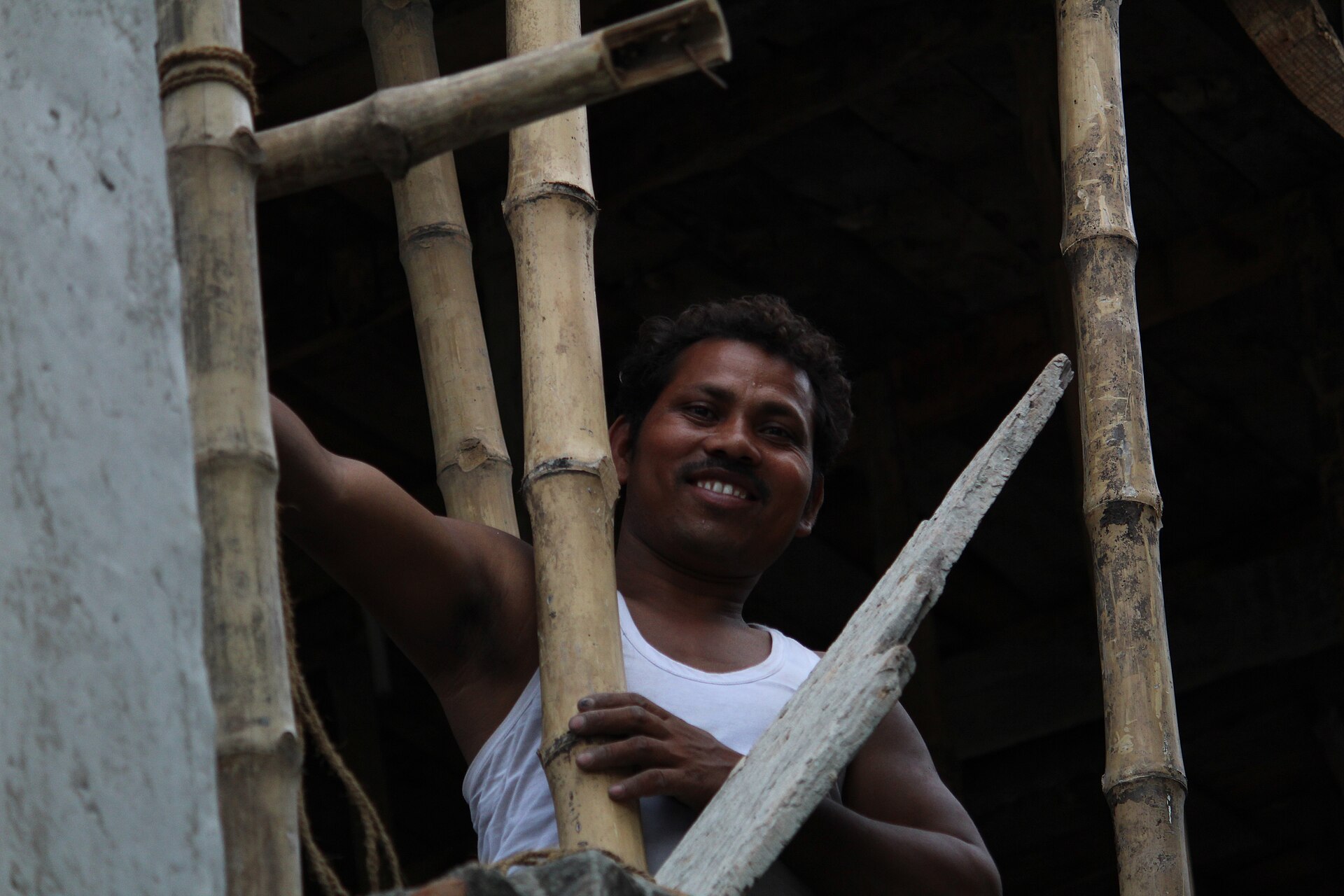

Walk through any Indian city in the early morning and you pass an economy that does not appear in most company registers. The vegetable seller with a handcart, the tailor working from a room off a lane, the woman rolling incense sticks at home for piece rates, the crew laying paving on a contract three subcontracts removed from the client, the small workshop that turns brass fittings for a larger factory: these are enterprises and workers, they produce measurable output, and they operate largely outside the framework of registration, written contracts and social security that defines formal employment. By any accepted measure, the overwhelming majority of India's workforce is employed this way. Estimates drawn from the government's Periodic Labour Force Survey and from earlier National Sample Survey rounds consistently place informal employment at roughly nine in ten workers, a proportion that has moved only slowly across decades of rapid economic growth.
Two distinct ideas are often muddled here, and separating them is the first step to understanding the subject. The informal sector is defined by the enterprise: unincorporated businesses owned by households, typically proprietorships or partnerships, usually below the size thresholds at which registration under factory or shops legislation becomes compulsory. Informal employment is defined by the job: work without a written contract, without paid leave, and without employer contributions to provident fund or insurance. The second is much larger than the first, because informal jobs also exist inside formal firms. A contract worker on a factory floor, a security guard supplied by an agency to a bank, or a delivery rider classified as a partner of a platform company may all work for large registered businesses while holding none of the protections of formal employment. Growth in that category has been one of the defining labour market trends of the past three decades.
Why so much of the economy stays informal
The reasons are structural rather than cultural. Indian agriculture still absorbs a very large share of the workforce on holdings too small to support a household year round, which pushes surplus labour into casual non farm work. Manufacturing, which in East Asian economies pulled workers from farms into factories, has never grown its employment share far in India, so the transition has been mostly from farm to informal services and construction. Firm size distribution reinforces this: India has a very large number of tiny enterprises and a comparatively thin middle of medium sized firms, so most workers are employed in units too small to formalise easily.
Compliance costs matter too. A business crossing employment thresholds becomes subject to a stack of labour statutes, inspection regimes and record keeping obligations, and firms have long been observed to stay just under those thresholds. The counter argument, made forcefully by labour economists, is that deregulation would not by itself create formal jobs, because demand and skills constrain hiring more than statute does. Both positions have serious evidence behind them and the balance is not settled.
The state has responded in three broad ways. The first is direct employment guarantee: the rural employment programme enacted in 2005, which gives every rural household a legal entitlement to a set number of days of unskilled manual work at a notified wage, functions as a floor under rural wages and a countercyclical buffer, and its demand data are watched as a distress indicator. The second is sector specific protection, including the construction workers legislation of 1996 that levies a cess on building projects to fund welfare boards, and the Street Vendors Act of 2014, which for the first time gave hawkers a statutory right to be surveyed, licensed and heard before eviction rather than treated purely as an obstruction. The third is registration and portability: the Unorganised Workers' Social Security Act of 2008 created welfare boards, and the e Shram portal launched in 2021 has registered several hundred million unorganised workers on a national database intended to make benefits portable across states.
Shocks, formalisation and what is actually changing
Two policy events in quick succession made the informal economy a national argument. In November 2016 the government withdrew legal tender status from the highest denomination currency notes then in circulation, removing the large majority of cash by value from an economy in which informal wages, supplier payments and working capital were overwhelmingly settled in cash. Formal sector data recovered relatively quickly; the effect on unregistered enterprises was harder to measure precisely, for the very reason that they are unregistered, and studies have reported substantial short term disruption to small manufacturing and trade. In July 2017 the goods and services tax arrived, with input tax credits that give registered buyers a reason to prefer registered suppliers, creating a pull towards formalisation along supply chains, though a composition scheme and a turnover threshold keep the smallest firms outside.
Alongside these came a genuine infrastructure change. Mass opening of no frills bank accounts from 2014, the linking of subsidy payments directly to those accounts, and the arrival of a national instant payments system that works from a basic smartphone have put digital transaction records into the hands of vendors who previously had none. That matters because the absence of a verifiable cash flow record is one of the reasons small enterprises cannot borrow from banks and instead pay far higher rates to informal lenders.
Whether all this amounts to formalisation is disputed, and the dispute is substantive rather than semantic. Registering on a database, holding a bank account and accepting digital payments changes a worker's visibility to the state. It does not by itself provide a written contract, a pension contribution, paid sick leave or protection from arbitrary dismissal. Four consolidated labour codes were passed in 2019 and 2020 to replace dozens of older statutes, extending social security in principle to gig and platform workers, but their implementation has been staged and dependent on states framing rules, so the practical effect has taken years to become visible.
The pandemic settled at least one question. When national restrictions were imposed in March 2020, millions of migrant workers in cities lost income and accommodation within days and set out for their home districts, many on foot, because nothing in their employment relationship obliged anyone to keep paying them and their entitlements were registered in states they were not living in. It was the clearest possible demonstration that informality is not a statistical category but a description of exposure. Reforms since, including nationwide portability of food ration entitlements, followed directly from that failure. The underlying condition, that most Indians work without the protections most Indians assume workers have, has not changed.
References
- Ministry of Statistics and Programme Implementation, Government of IndiaPeriodic Labour Force Survey annual reports
- International Labour OrganizationWomen and Men in the Informal Economy: A Statistical Picture
- Ministry of Labour and Employment, Government of Indiae-Shram: National Database of Unorganised Workers
- Reserve Bank of IndiaAnnual Report and Report on Currency and Finance
- Ministry of Rural Development, Government of IndiaMahatma Gandhi National Rural Employment Guarantee Act
This is a reference article, written from the sources above. It is background, not news reporting.